


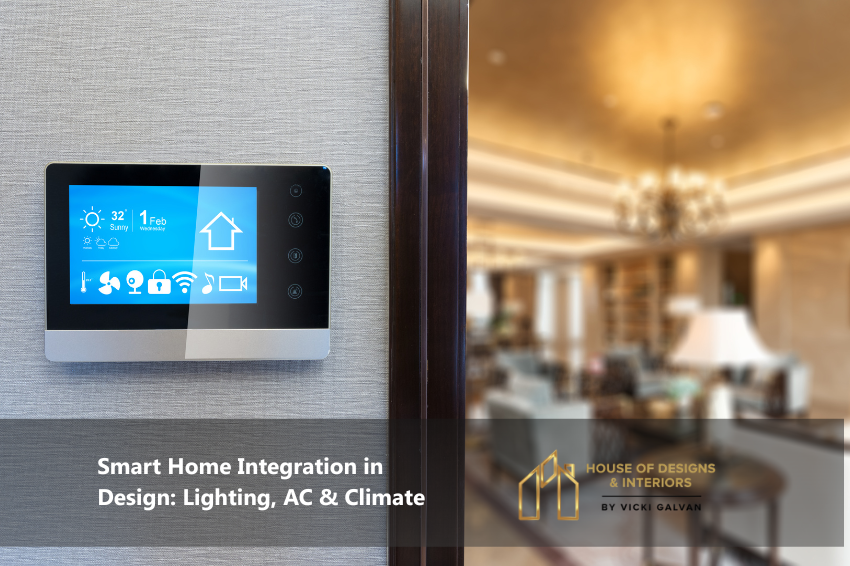
Smart home integration in design is more than a trend—it’s shaping the future of how we live. Imagine walking into a space where the lights adjust automatically, the temperature is always comfortable, and your entire environment adapts to your lifestyle without you lifting a finger.
By combining technology with thoughtful home design, smart systems for lighting, AC, and climate automation create homes that are efficient, comfortable, and sustainable. In this post, we’ll explore why smart home integration in design matters, how it transforms everyday living, and practical steps to make it a reality.
Why Smart Home Integration in Design Matters
When planning a modern home, smart home integration in design delivers three major benefits:
- Efficiency & Energy Savings
- Smart thermostats and lighting reduce unnecessary energy use by adjusting to occupancy and time of day.
- According to Energy.gov, automated systems can cut household energy use by 10–30%.
- Comfort & Convenience
- Smart AC ensures each room is at the perfect temperature.
- Lighting can shift from bright morning productivity to warm evening relaxation automatically.
- Aesthetics & Resale Value
- Seamless, hidden smart systems enhance sleek, minimalist interiors.
- Homes with smart home integration in design are increasingly attractive to buyers.
👉 If you’re preparing to sell your property, check out our [Home Seller Guide] for tips on increasing value with smart upgrades.
Smart Lighting Integration in Modern Homes
Lighting is one of the most impactful aspects of smart home integration in design.
Benefits of Smart Lighting:
- Dynamic Ambiance: Adjust brightness and color temperature throughout the day.
- Scheduling: Lights turn on with sunrise or dim at sunset automatically.
- Integration: Connect with blinds, security systems, and voice assistants.
Design Considerations:
- Plan smart lighting during the early phases of renovation or construction.
- Use platforms like Apple HomeKit, Alexa, or Google Home for unified control.
- Choose fixtures that match your interior style while hiding cables and hubs.
Image Suggestion:
- Living room with layered smart lighting.
- Alt text: smart home integration in design with intelligent lighting.
Smart AC Systems and Integrated Comfort
Smart AC is important because temperature control directly impacts comfort.
Features of Smart AC:
- Remote Control: Adjust via smartphone apps from anywhere.
- Learning Behavior: Systems adapt to daily routines, reducing waste.
- Geofencing: Automatically adjusts when you’re arriving or leaving.
Implementation Tips:
- Invest in compatible smart thermostats (Nest, Ecobee, Honeywell).
- Ensure Wi-Fi coverage in every room for reliable control.
- Upgrade existing units with smart sensors like Sensibo or Tado°.
Image Suggestion:
- Modern thermostat on wall.
- Alt text: smart home integration in design with AC automation.
👉 For families considering a move, our [Buyer Packet for Smart Homes] outlines what to look for in tech-ready properties.
Climate Automation in Smart Home Design
The most advanced step in smart home integration in design is full climate automation.
Components of Climate Automation:
- Smart Blinds & Shades: Adjust automatically during peak sunlight.
- Humidity & Airflow Sensors: Maintain air quality for health and comfort.
- Multi-Room Ecosystems: Control temperature, lighting, and blinds in sync.
Interoperability Matters:
- Choose platforms that support Matter or Zigbee for cross-brand compatibility.
- Consider local-control systems like Home Assistant for privacy.
Image Suggestion:
- Bedroom with automated blinds lowering at sunset.
- Alt text: climate automation as part of smart home integration in design.
Challenges of Smart Home Integration in Design
While benefits are strong, it faces some challenges:
- Compatibility Issues
- Not all systems work together. Standardized protocols like Matter are solving this.
- Connectivity
- Weak Wi-Fi or poor hub placement can lead to lag or outages.
- Privacy Concerns
- Cloud-based systems raise data security issues. Choose encrypted or local-first platforms.
- Cost
- Initial setup costs may be high, but energy savings offset them long-term.
Future of Smart Home Integration in Design
Looking ahead, smart home integration in design is set to become even more intuitive:
- AI-Driven Homes: Systems like LG ThinQ predict needs and adjust automatically.
- Voice Without Cloud: Devices with edge AI enable private, offline commands.
- Eco-Focused Homes: Climate automation will reduce carbon footprints significantly.
- Seamless Ecosystems: Matter ensures devices from different brands work flawlessly together.
Conclusion
It is not just about convenience—it’s about creating homes that are responsive, energy-efficient, and future-ready.
From intelligent lighting to adaptive AC and full climate automation, integrated systems enhance your quality of life while adding long-term property value.
Next Steps for Homeowners:
- Start small—try smart lighting or a thermostat.
- Expand into climate automation gradually.
- Secure your systems with strong privacy settings.
- Consult design professionals for seamless integration.
👉 Want to stay ahead on home trends? Subscribe to our [Monthly Real Estate Newsletter].

Author: housedi
"Let color, form, space, texture, pattern, line, and light be your guide through the world of interior design." WE ARE MORE THAN A FRESH COAT OF PAINT.