

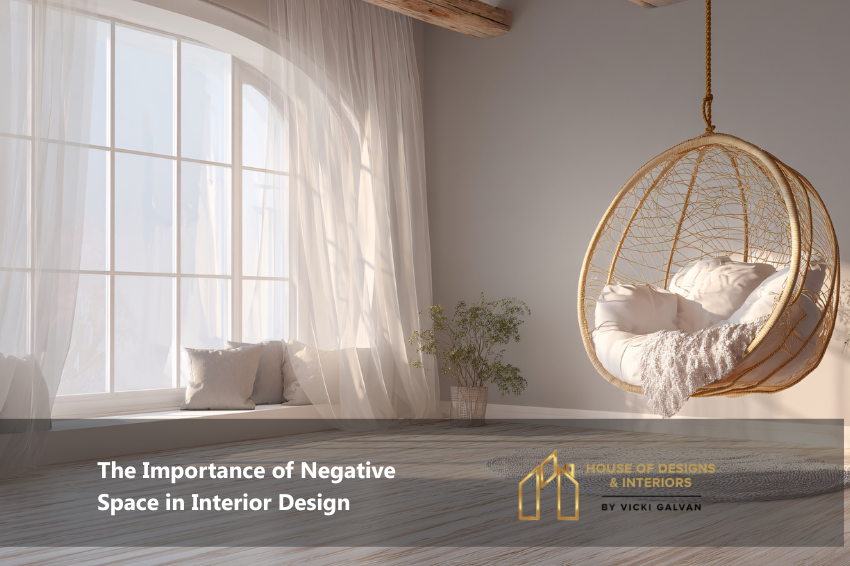
When people think of interior design, they often focus on colors, furniture, or statement pieces. Yet one of the most powerful design principles lies in what’s not there — negative space. Also known as “white space,” negative space in interior design refers to the intentional use of empty or open areas to give balance, clarity, and breathing room within a space.
Far from being empty or boring, negative space plays a vital role in shaping how a room feels, functions, and flows. Understanding how to use it can elevate any home or workspace from cluttered to calm, from busy to beautifully balanced.
What Is Negative Space in Interior Design?
Negative space in interior design is the unoccupied area around and between furniture, décor, and architectural elements. It’s the space that allows your eyes — and your mind — to rest.
For example, imagine a living room where the sofa, rug, and coffee table are carefully positioned, leaving just enough room for movement and light. That deliberate openness helps create a sense of ease and visual harmony.
In essence, negative space is not about leaving areas blank; it’s about creating balance. Without it, even the most luxurious room can feel overwhelming or chaotic.
Why Negative Space Matters
A well-designed interior isn’t just about what you include — it’s about what you leave out. Here’s why negative space in interior design is so important:
- Creates Visual Balance
Negative space gives the eyes a break and helps emphasize focal points like artwork or architectural features. It prevents overstimulation and allows the room’s best features to shine. - Improves Functionality
Open areas make movement natural and comfortable. Without negative space, furniture can feel cramped, reducing usability. - Promotes a Sense of Calm
Spaciousness is psychologically linked to tranquility. Rooms that “breathe” feel less stressful, more relaxing, and more refined. - Enhances Lighting and Flow
When areas aren’t overcrowded, light travels freely. Both natural and artificial light can highlight materials, textures, and shapes more effectively. - Supports Modern Minimalism
As modern design trends continue to value simplicity, the deliberate use of negative space reinforces minimalism without sacrificing warmth or personality.
Positive vs. Negative Space: Finding Harmony
In design, positive space refers to filled areas — furniture, décor, and objects — while negative space refers to the areas around them. The two must work together to create harmony.
- Too much positive space: The room feels cluttered and heavy.
- Too much negative space: It can feel empty or unfinished.
- Balanced proportion: The environment feels intentional and cohesive.
The art lies in finding equilibrium — allowing each element to breathe while maintaining comfort and style.
How to Use Negative Space Effectively
Creating harmony through negative space takes skill and a clear eye. Here are several ways to apply this design principle like a professional:
1. Plan Your Layout Thoughtfully
Before filling a room, start by assessing flow. Consider how people will move through the space. Leave clear pathways that make sense and feel natural. A balanced layout ensures the negative space complements, rather than competes with, the furniture.
Tip: Stand at the entrance of your room and take a slow visual scan. If your eyes don’t know where to rest, there’s probably too little negative space.
2. Simplify Furniture and Décor
Less is often more. Choose furniture that fits your space proportionally and serves a purpose. Oversized pieces can crowd a room, while too many accessories create noise.
Use statement pieces — like a sculptural lamp or bold art — surrounded by open space. That contrast will draw attention where it belongs.
3. Use Wall Space Intentionally
Walls play a huge role in defining negative space. You don’t need to fill every inch with art or shelving. A single, large-scale piece can make a stronger impression when surrounded by clean, open walls.
According to Architectural Digest, minimal wall clutter helps elevate visual sophistication while emphasizing form and texture (source).
4. Play with Lighting
Lighting can highlight negative space beautifully. Recessed lighting, under-cabinet LEDs, and strategically placed lamps can emphasize depth and openness.
Moreover, lighting design can “frame” empty areas, turning them into intentional features rather than voids. Natural light, especially, enhances a sense of serenity.
5. Incorporate Natural Materials
Materials like stone, wood, and linen benefit from space around them. They need room to “breathe” so their textures can shine. Negative space helps natural materials take center stage without feeling forced or busy.
As Houzz explains, modern interiors rely on texture, contrast, and proportion to create peaceful environments (source).
6. Use Color and Contrast
Color can guide how negative space is perceived. Light colors like whites, creams, or soft neutrals enhance openness, while darker tones can make a space feel cozier or more intimate.
Balance contrasting tones thoughtfully. A white wall behind a black leather sofa, for example, highlights the interplay between positive and negative space perfectly.
7. Let Architecture Lead
Sometimes, architectural features — such as archways, high ceilings, or open beams — naturally create negative space. Highlight these structural elements instead of cluttering them. Doing so enhances both depth and character.
The Psychological Impact of Negative Space
Negative space doesn’t just affect aesthetics — it influences mood and behavior. Research in environmental psychology shows that open, uncluttered spaces promote relaxation and focus.
When rooms are packed with visual stimuli, the brain has to process more information, leading to mental fatigue. Conversely, a balanced environment fosters clarity and creativity.
In workspaces, negative space encourages productivity. In homes, it nurtures peace and emotional well-being. The message is clear: space is not wasted; it’s essential.
Common Mistakes to Avoid
Even with good intentions, it’s easy to misuse negative space. Here are frequent pitfalls:
- Over-minimalism: Avoid making a room feel sterile. Add warmth through texture, color, or plants.
- Ignoring scale: Large rooms require more visual balance than smaller ones.
- Neglecting purpose: A design must suit how the space is actually used. A living room shouldn’t feel like a gallery.
- Filling gaps impulsively: Not every corner needs something. Empty spaces can be powerful design statements.
Applying Negative Space in Different Rooms
Let’s explore how to apply the principle across various areas:
Living Room
Use open floor areas to frame focal pieces like a fireplace or coffee table. Arrange furniture to promote easy movement and conversation. Avoid overcrowding with too many small décor items.
Kitchen
Leave countertops clear and limit open shelving displays. Focus on practical elegance: balanced spacing between appliances, lighting, and cabinetry enhances both function and calm.
Bedroom
Negative space in a bedroom promotes rest. Keep décor minimal, with soft lighting and ample space around the bed. Choose a few meaningful accents instead of cluttering nightstands or walls.
Bathroom
Simplify surfaces and avoid unnecessary fixtures. A clean, open design evokes a spa-like atmosphere — a favorite modern trend that emphasizes relaxation.
The Role of Negative Space in Minimalist Design
Minimalism and negative space go hand-in-hand. While minimalism focuses on simplicity, negative space defines how that simplicity feels. A minimalist room without well-planned spacing risks feeling bare; with negative space, it feels intentional and serene.
If your style leans toward modern or Scandinavian design, mastering negative space is essential. It’s what turns minimalism from “empty” to “elevated.”
How to Balance Negative Space and Personality
Some fear that too much open space makes a home feel impersonal. The key is balance. You can incorporate warmth without losing the benefits of openness:
- Add plants for life and softness.
- Use textured fabrics and natural materials.
- Incorporate artwork sparingly but meaningfully.
- Mix in personal touches — family photos or heirlooms — within clean, open compositions.
This approach keeps the atmosphere refined yet authentic.
Final Thoughts: The Art of Breathing Room
Designing with negative space is more than a visual strategy — it’s a philosophy. It teaches restraint, patience, and intentionality. Every designer, whether professional or DIY enthusiast, should understand that what you don’t add can be as powerful as what you do.
When used wisely, negative space in interior design transforms ordinary rooms into calm, confident spaces that inspire. It’s the art of creating beauty through simplicity — giving every element the room it deserves

Author: housedi
"Let color, form, space, texture, pattern, line, and light be your guide through the world of interior design." WE ARE MORE THAN A FRESH COAT OF PAINT.